
Where Safety Meets the Rock Face
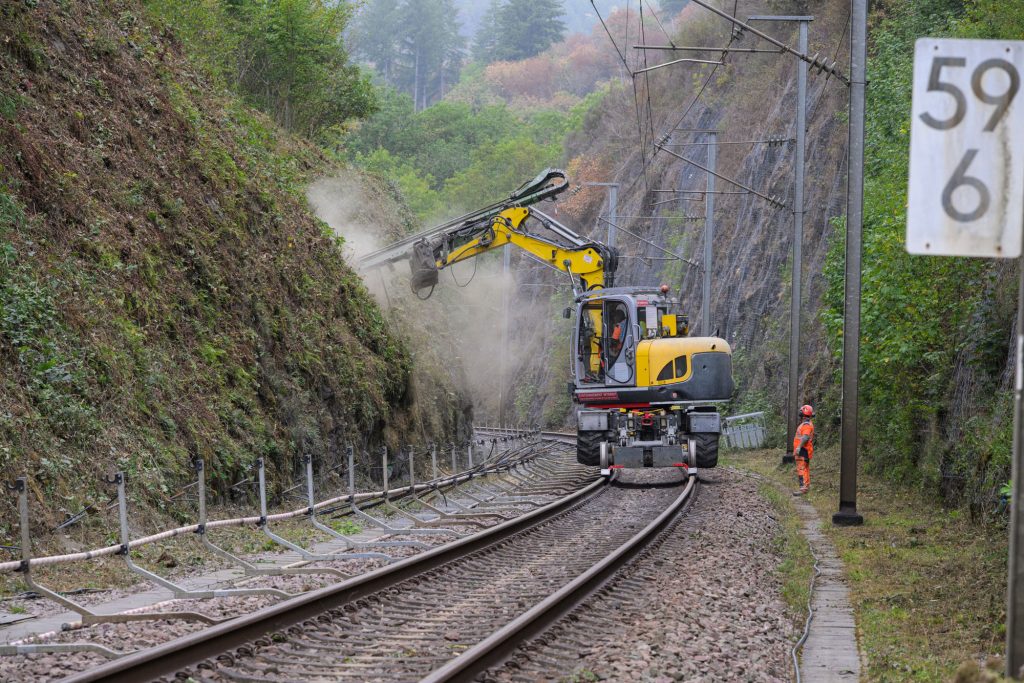
How the CFL are securing rock faces along the Northern Line and keeping invisible hazards away from the railway track
Anyone currently travelling on the Northern Line will need to switch from train to bus for part of the journey. Behind this temporary arrangement lies a demanding construction project: in Goebelsmühle, the distinctive rock faces alongside the railway are being secured. It is work carried out at great heights, among rock, ropes and steel, helping to ensure that trains can travel even more safely through the narrow valley in the future.
Safety has many faces at the CFL. Often, the work is done out of sight, ensuring that passengers as well as CFL employees reach their destinations safely. One of these faces is Tim. For several years, he has been helping to ensure that nature and rail operations remain in balance along the Northern Line.
300 metres of rock face, 14 metres high and no solid ground beneath
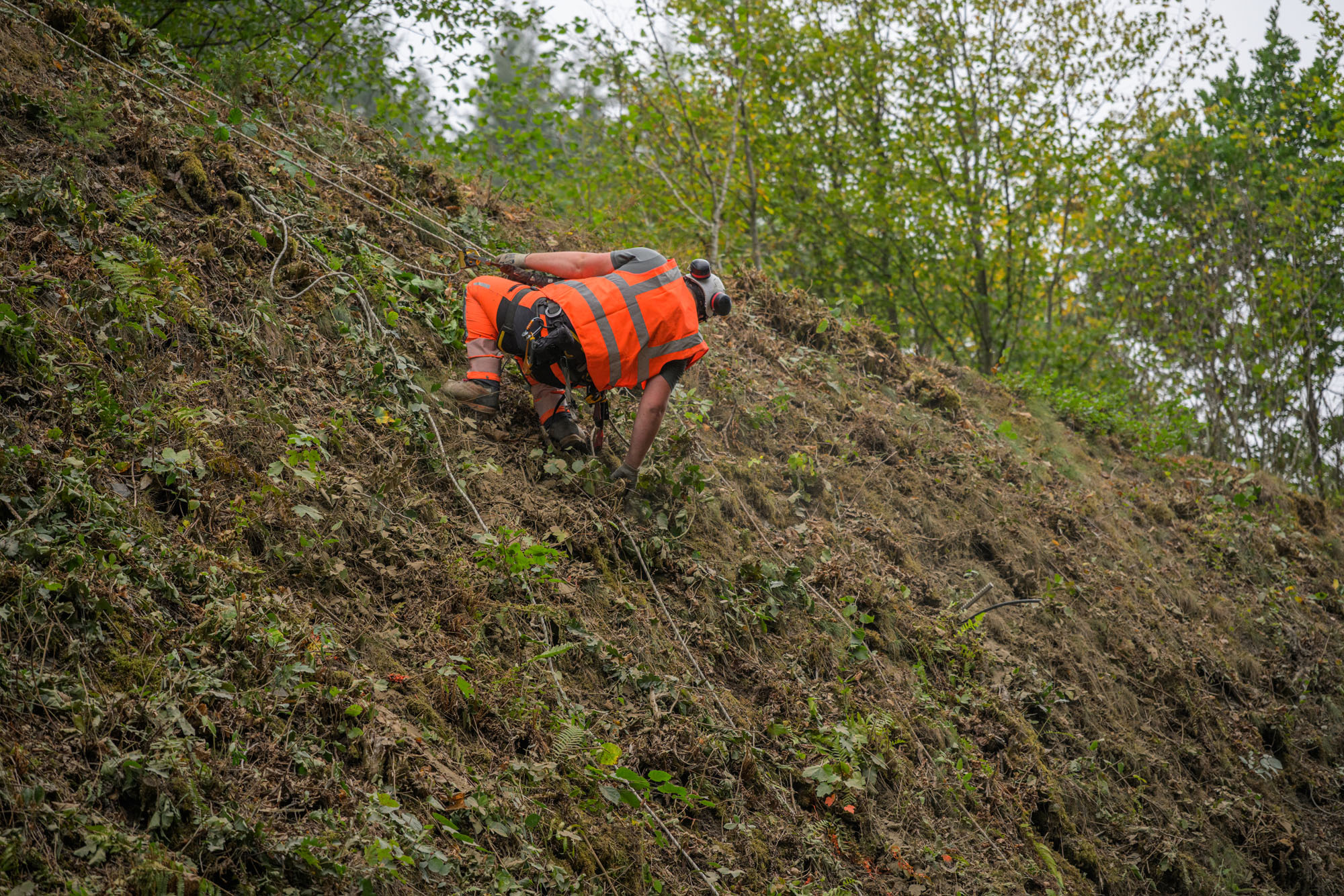
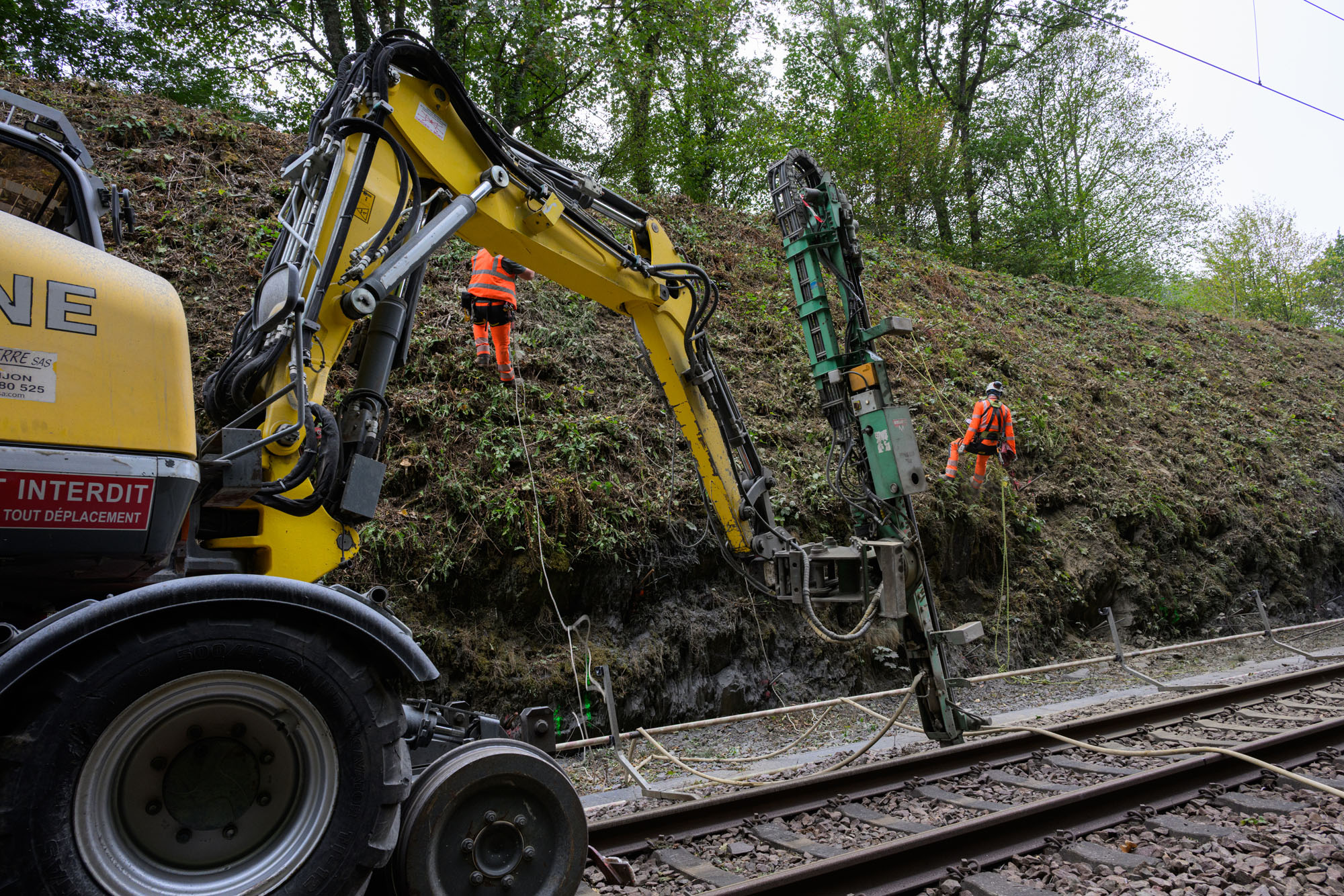
While no trains are running on this section of the line, activity is in full swing near Goebelsmühle. Over a stretch of almost 300 metres, the steep rock faces are being secured. Just beyond the station, the railway runs through what resembles a narrow corridor, with rock formations rising up to 14 metres high on both sides.
“Together with the local flora and fauna, the rock faces form a living habitat. However, rock is not immovable. Severe weather conditions in particular can cause individual blocks to become detached and, in the worst case, fall onto the railway tracks.”
To prevent a minor change from becoming a safety risk, the rock faces are inspected regularly, up to five times per calendar year. Tim carefully examines every area of concern. If he identifies cracks, movement or rock formations that may have become unstable, more detailed inspections follow. Only then is a decision taken on the appropriate stabilisation measures.
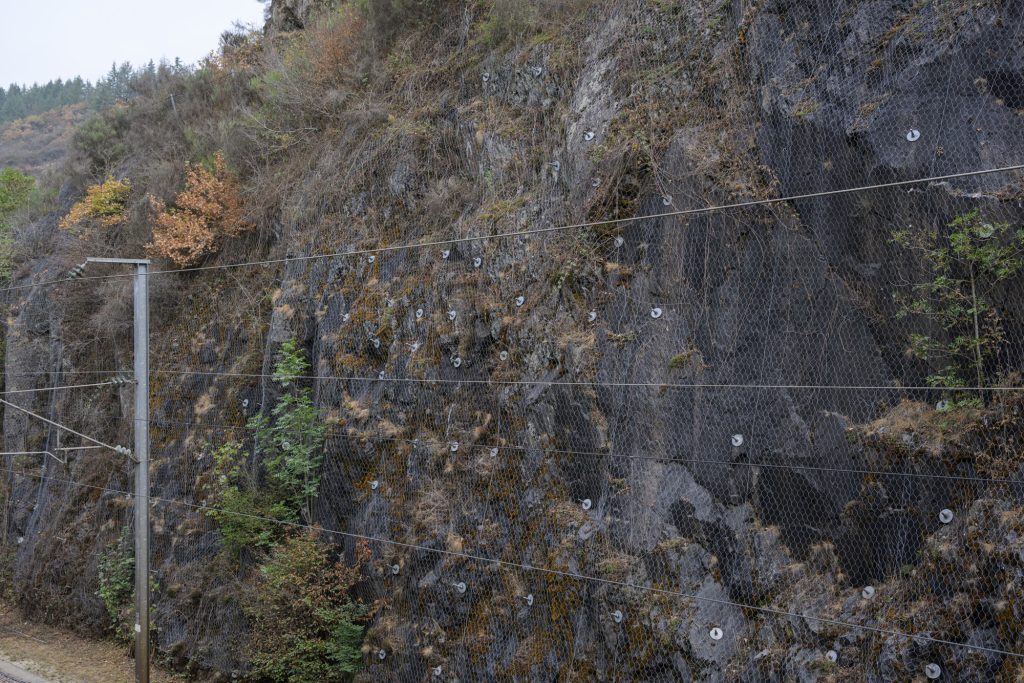
“Areas deemed at risk are secured with steel mesh. The mesh is fitted as closely as possible to the rock face. This allows it to hold loose rock in place or catch it before it reaches the tracks. For this project, the CFL are working together with a specialised external contractor.”
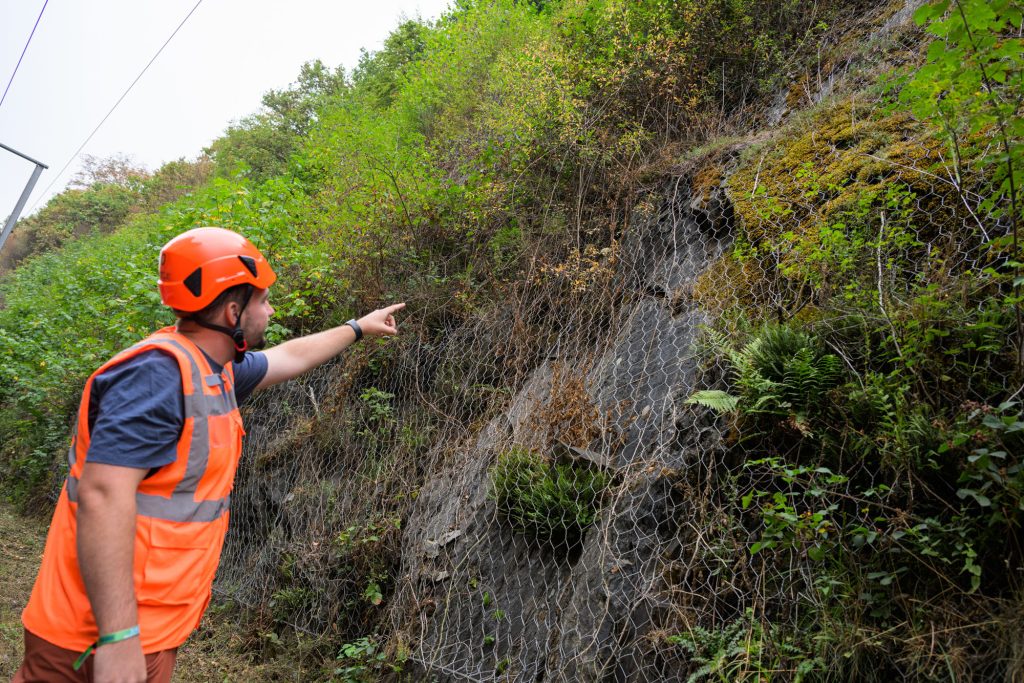
Precision work on a rope
The scale of the project
- Around 200 drill holes are being carried out along nearly 300 metres of rock face.
- A rock anchor is installed in each drill hole.
- The anchors extend up to three metres deep into the shale-bearing rock layers.
- Large anchor plates and nuts press the steel mesh firmly against the rock face.
- Secured by climbing ropes, the contractor’s specialists work up to 14 metres above ground level.
The drill holes are carried out first, followed by the installation of the rock anchors. Once these preparatory works have been completed, the actual installation of the mesh begins. Nearly 40 rolls of steel mesh, weighing an average of 150 kilograms each, are flown by helicopter to their designated locations.
While this may look spectacular, it serves a very practical purpose: the material can be delivered quickly and precisely to the hard-to-reach rock face. As Tim explains, this helps keep the duration of the works to the absolute minimum required.
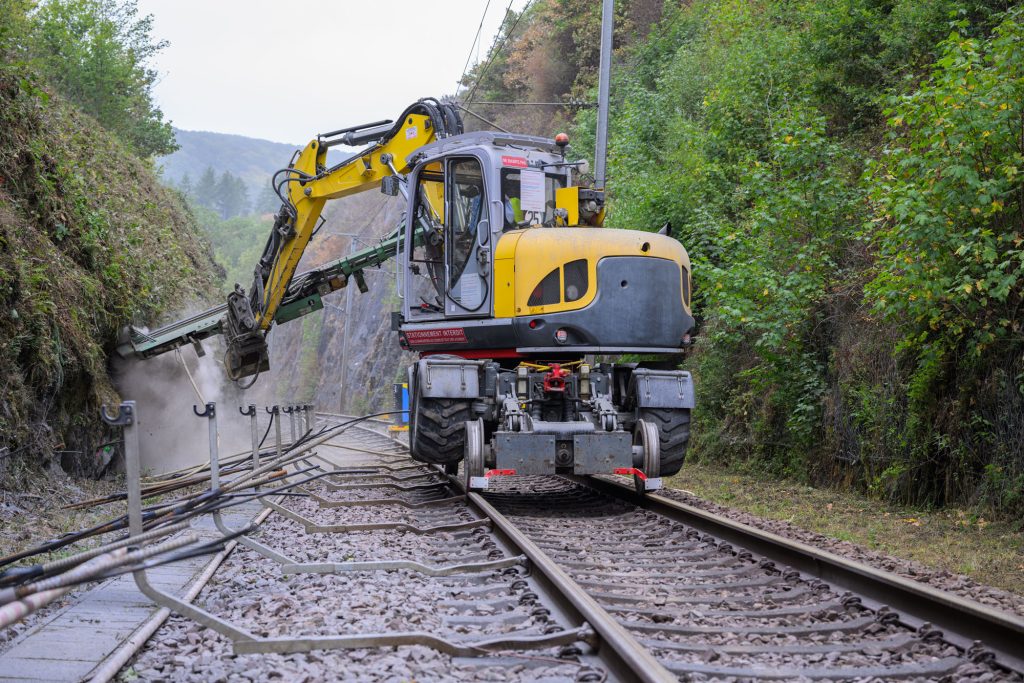
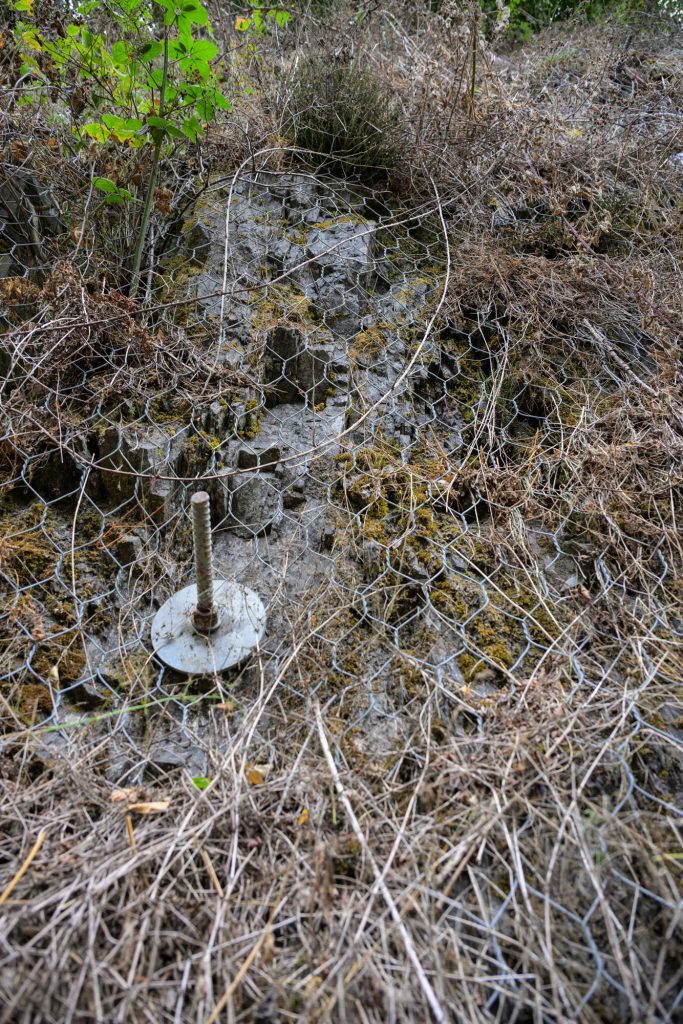
Safety built behind the scenes
“The helicopter operation naturally attracts a lot of attention. But equally impressive is the daily work carried out by our colleagues on the rock face. Hanging from ropes, they drill hole after hole and create the foundations that allow our trains to operate safely. They work without solid ground beneath their feet and with a double safety net,” says Tim with a smile.
When trains begin running through Goebelsmühle again, most passengers will hardly notice this work at all. And that is precisely its success: the rock faces remain part of the impressive landscape of the Northern Line, while steel anchors and mesh quietly ensure that the railway remains clear and safe.
Other articles you may like
-
Your mobility of tomorrow04 Sep. 20264 minutes
Where Safety Meets the Rock Face
Read more -
 Behind the scenes29 Jul. 20264 minutes
CFL buses are powering ahead with electric mobility
Read more -
 Your mobility of tomorrow24 Jul. 20265 minutes
Howald: Reinventing Mobility
Read more -
 Your mobility of tomorrow02 Mar. 20263 minutes
Reaching New Heights in Howald
Read more -
 Your mobility of tomorrow29 Jan. 20264 minutes
A busy year for the mobility of today and tomorrow
Read more -
 Your mobility of tomorrow12 Nov. 20253 minutes
Layer by Layer to a New Railway Line
Read more