
Howald: Reinventing Mobility
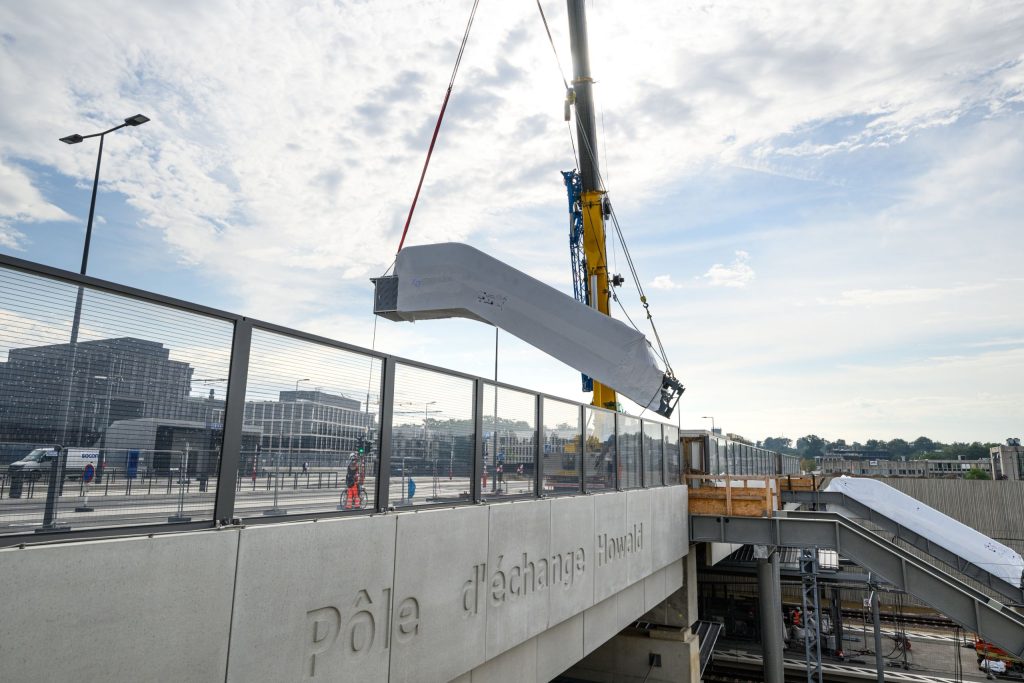
There are moments on a construction site that can still impress even the most experienced project managers. One of those moments recently took place in Howald.
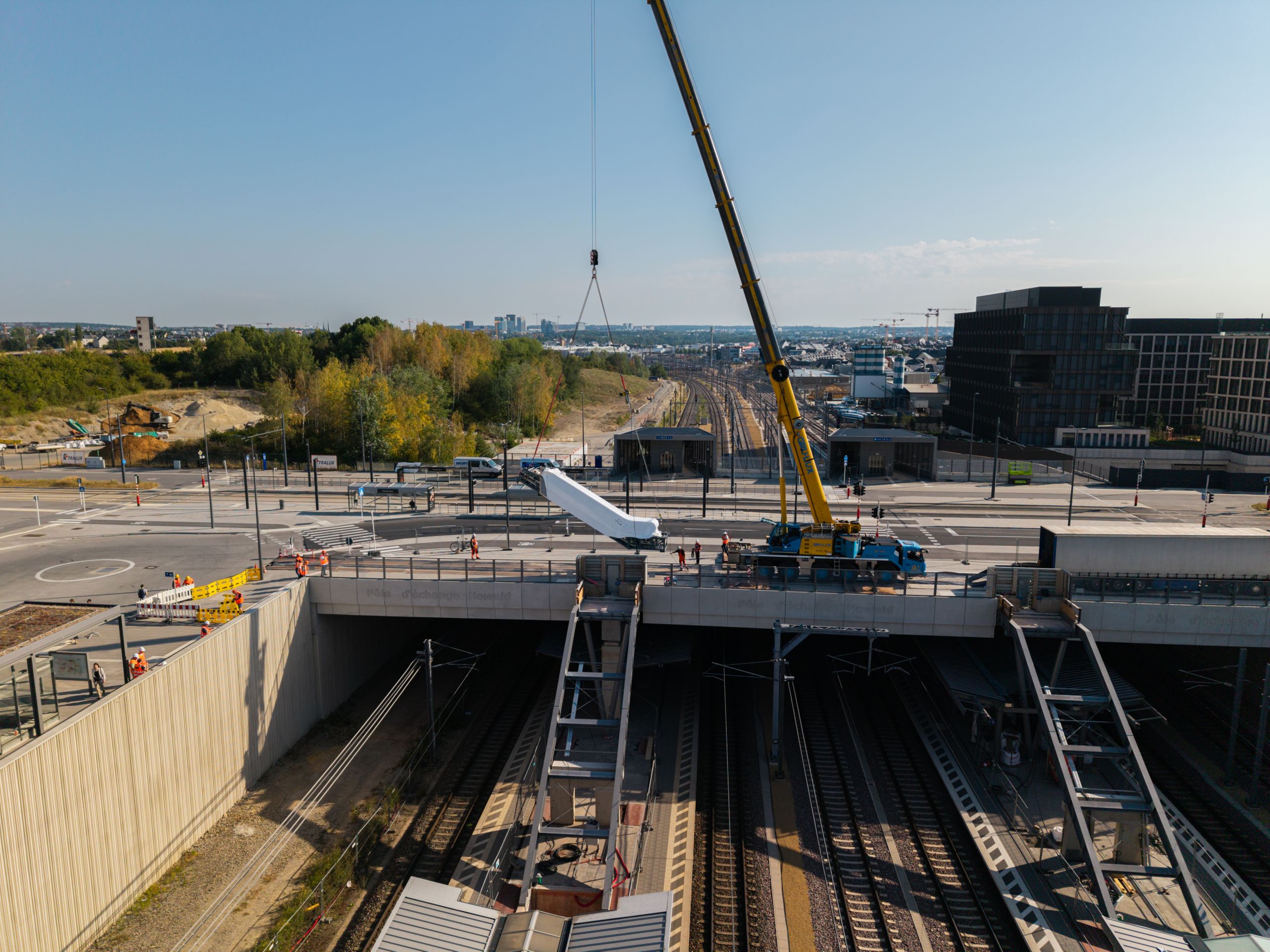
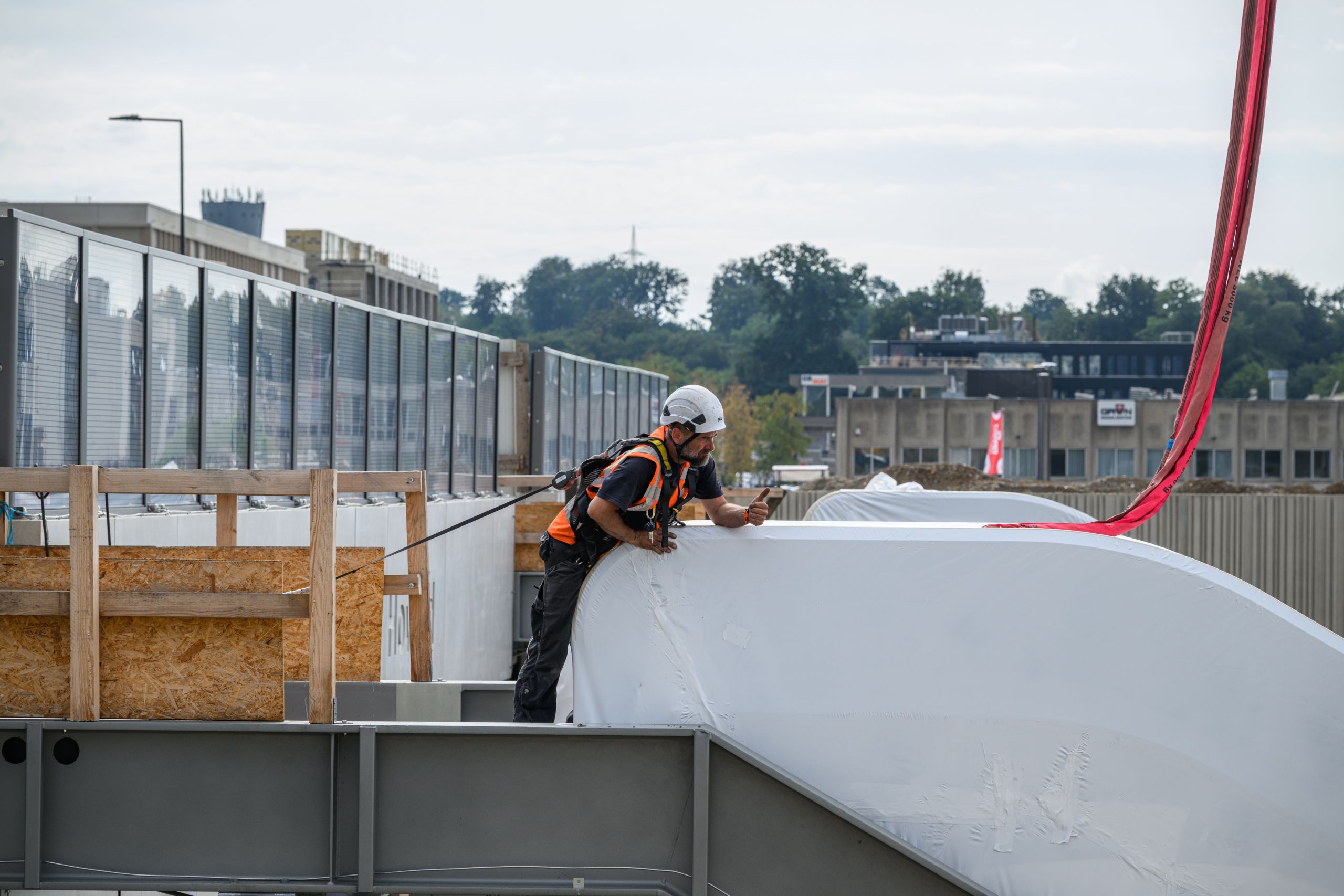
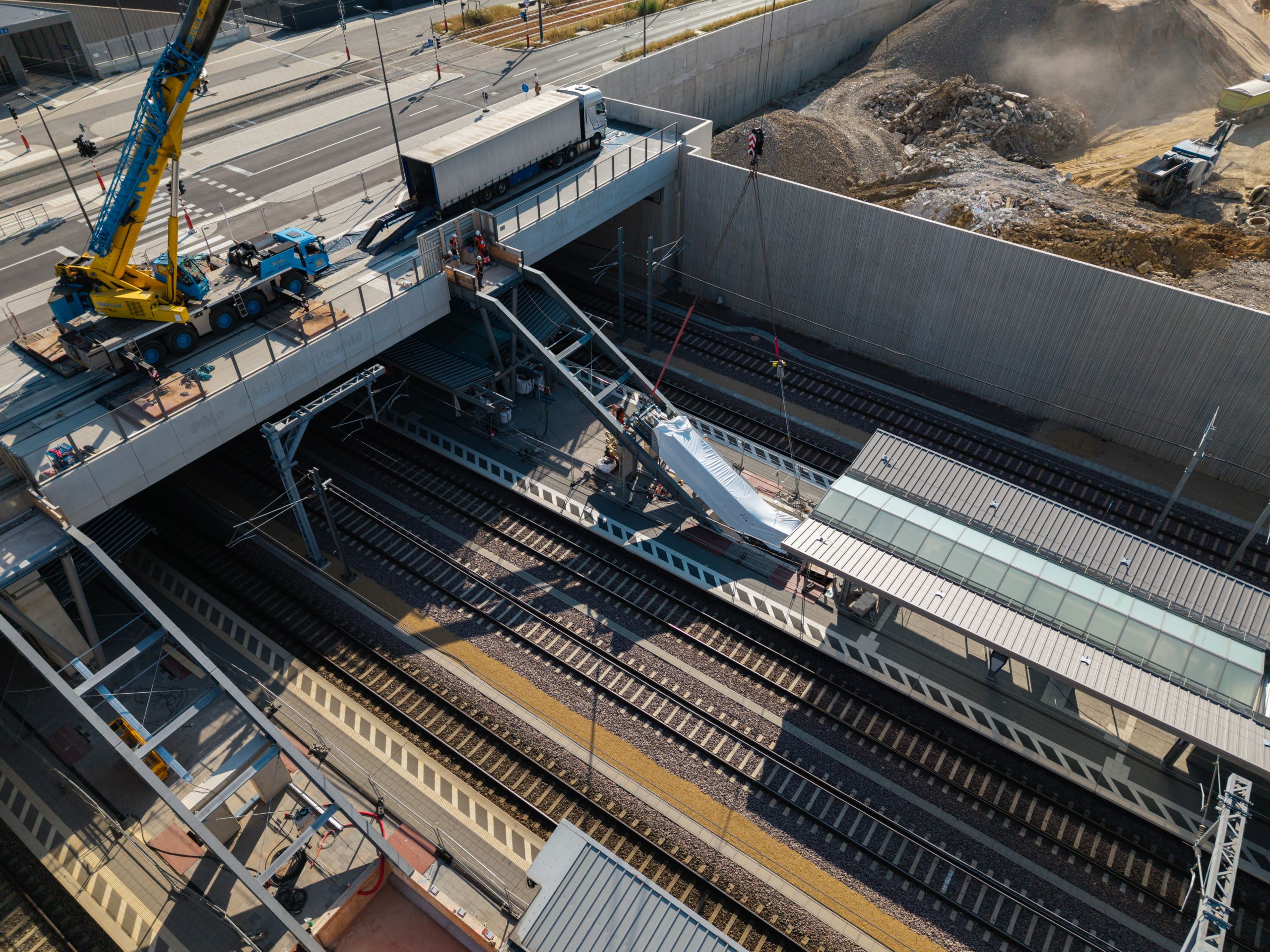
Last week, there was more than just anticipation in the air. Suspended several metres above the ground, seven-tonne steel structures seemed to be floating weightlessly above the site. All eyes – including those of Louis, Project Manager, and Julien, CFL Technical Engineering Project Manager, who were present on site – were fixed on one of the eight massive escalator sections being installed.
Positioned on the footbridge spanning the railway tracks, a crane carefully manoeuvred these impressive escalator structures, located right next to the “Howald Gare” tram stop, centimetre by centimetre into their final position. To passers-by, the operation may have looked like a spectacular lifting exercise. For the teams on site, however, it represented the culmination of months of intensive planning and preparation.
And as these heavy components gradually found their place, one thing became increasingly clear: the Howald project has definitively entered its final stretch.
“It is incredibly rewarding to see all the pieces of this enormous puzzle gradually come together”, explains Louis, Project Manager of the Howald Transport Hub. Since 2017, together with his team and many CFL colleagues, he has been working to reinvent mobility in Howald. Yet it is the past two years in particular that have left a lasting impression on him.
“It’s simply incredible to see how much the project has evolved, especially over the last two years.”
Louis, Project Manager of the Howald Transport Hub
“If we can now consider ourselves to be in the final phase of the project, it is thanks to the commitment of every single person involved. Whether they work for CFL or for one of our external partners, everyone has contributed to bringing this project to life. Each person has played their part. Without them, this transport hub would not exist.”
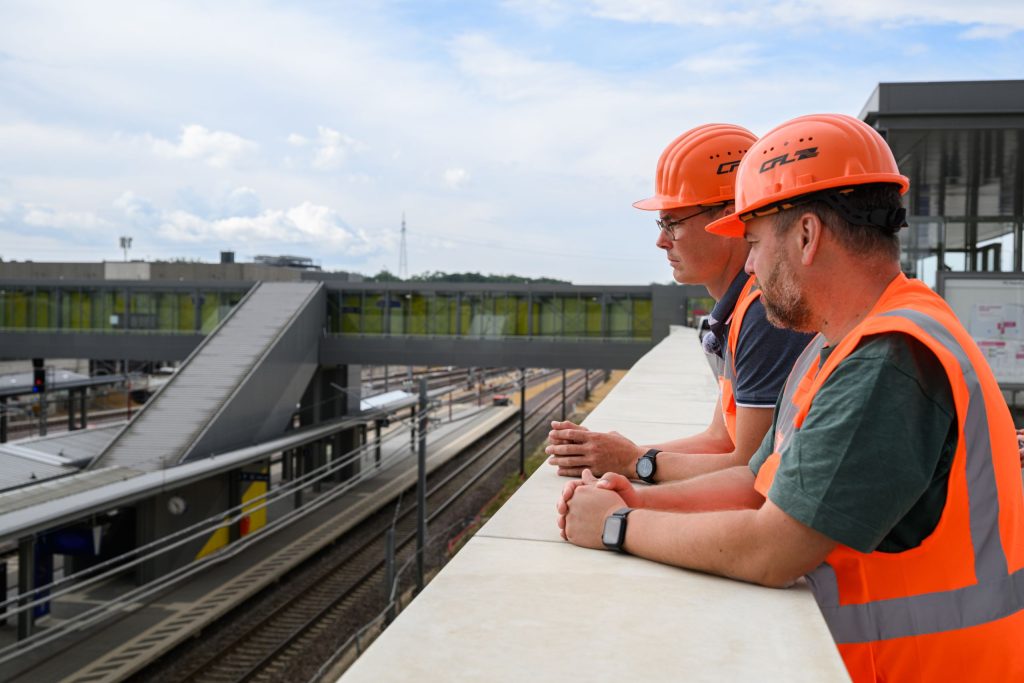
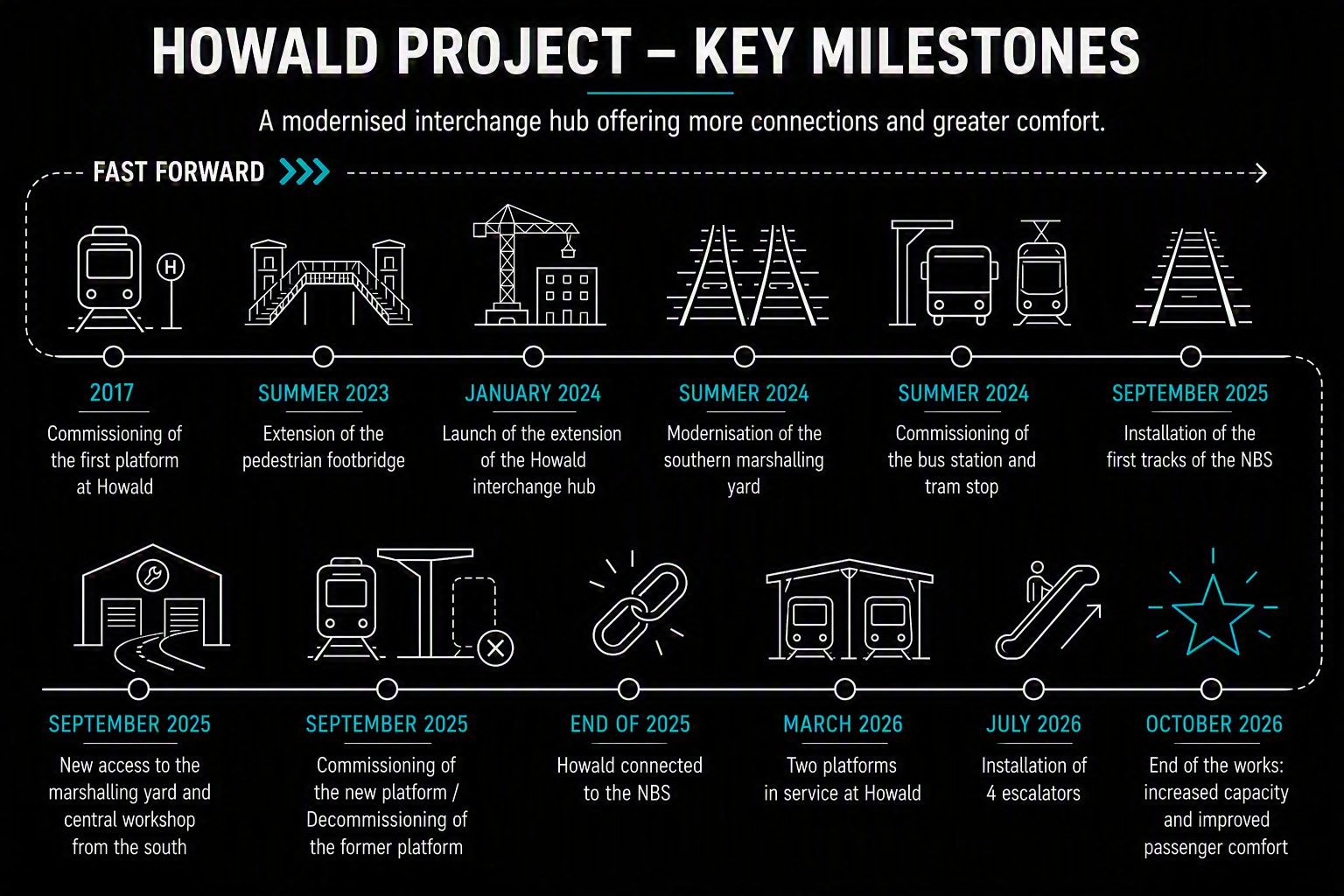
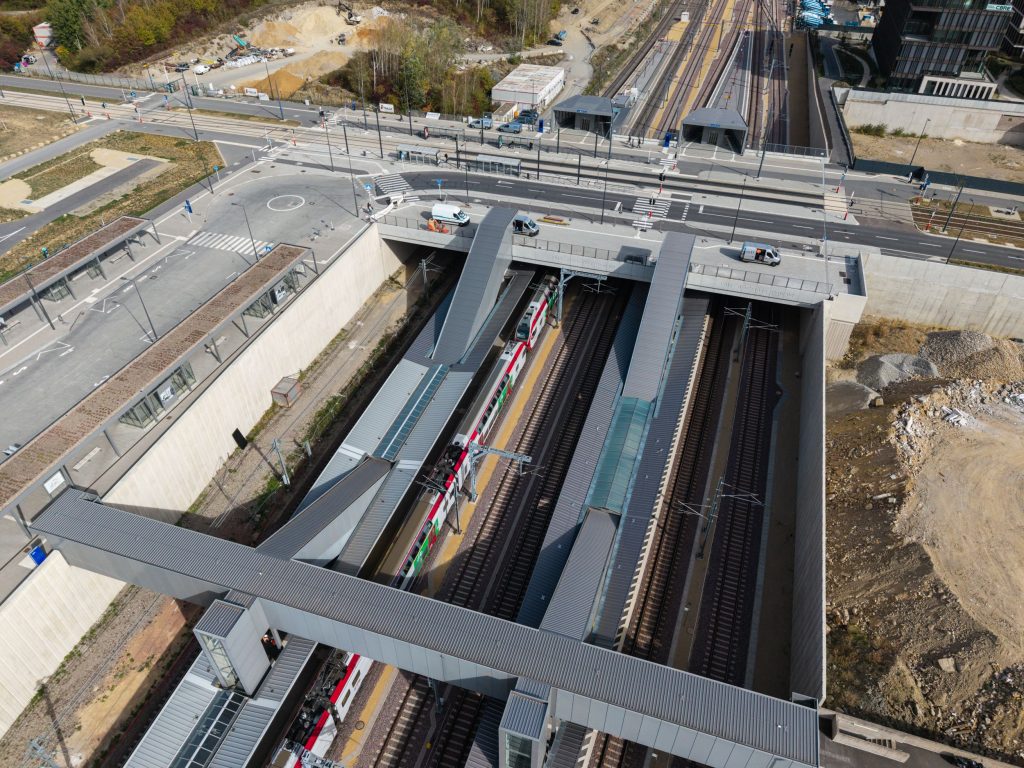
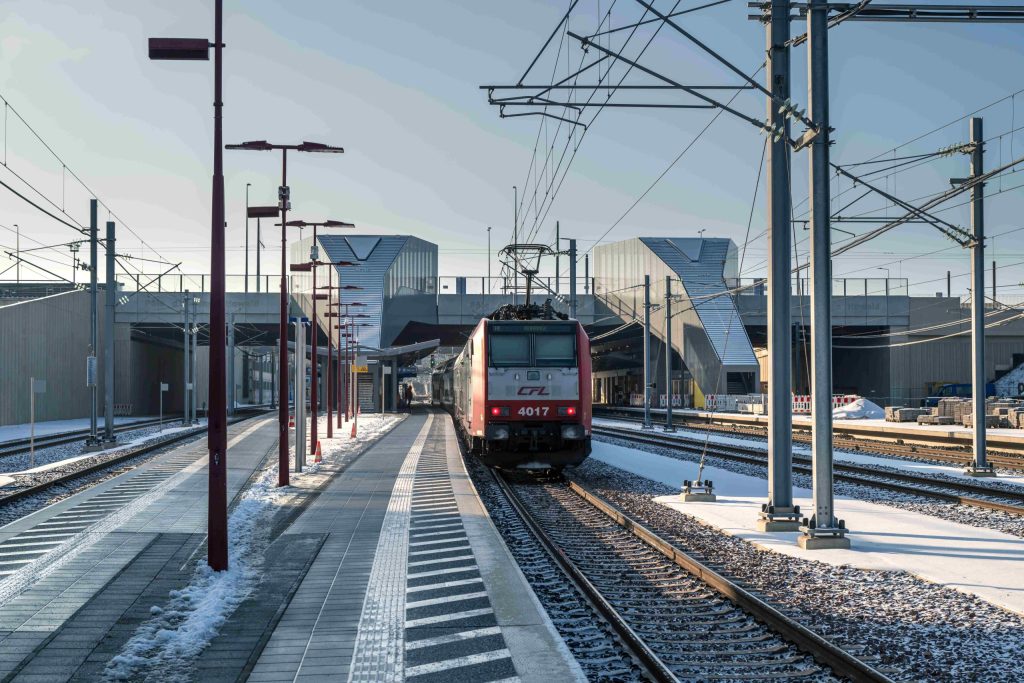
Anyone visiting the site today can immediately appreciate the scale of the transformation that has taken place since the opening of Howald station in 2017. An iconic pedestrian footbridge now spans the railway tracks, while a second platform complements the one commissioned in 2017. Elevators and stairways facilitate seamless connections between train, bus and tram services. A new vision of modern mobility is taking shape.
The installation of the escalators, which will soon connect the tram stop to the railway station alongside the stairs and elevators, now marks the final piece of that vision. “It is quite exceptional to integrate escalators of this scale into one of our projects,” explains Julien, who oversees the works on site. “It is naturally a great source of pride to see the project becoming reality step by step.”
Read also: Reaching New Heights in Howald
Seamless and Comfortable Travel Through Meticulous Planning and Execution
The installation of the escalators perfectly illustrates the level of precision required behind what appears, at first glance, to be a relatively simple piece of infrastructure.
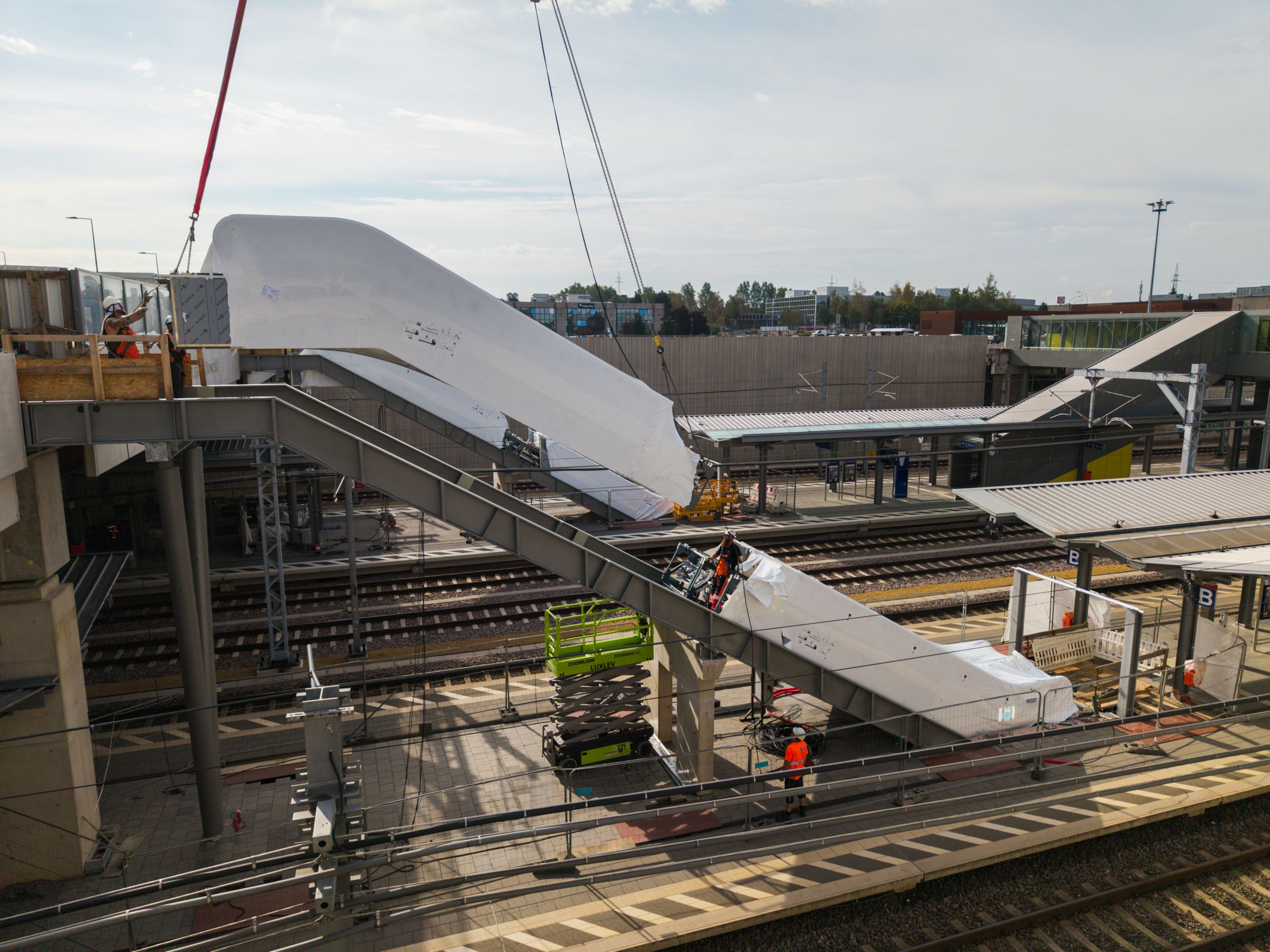
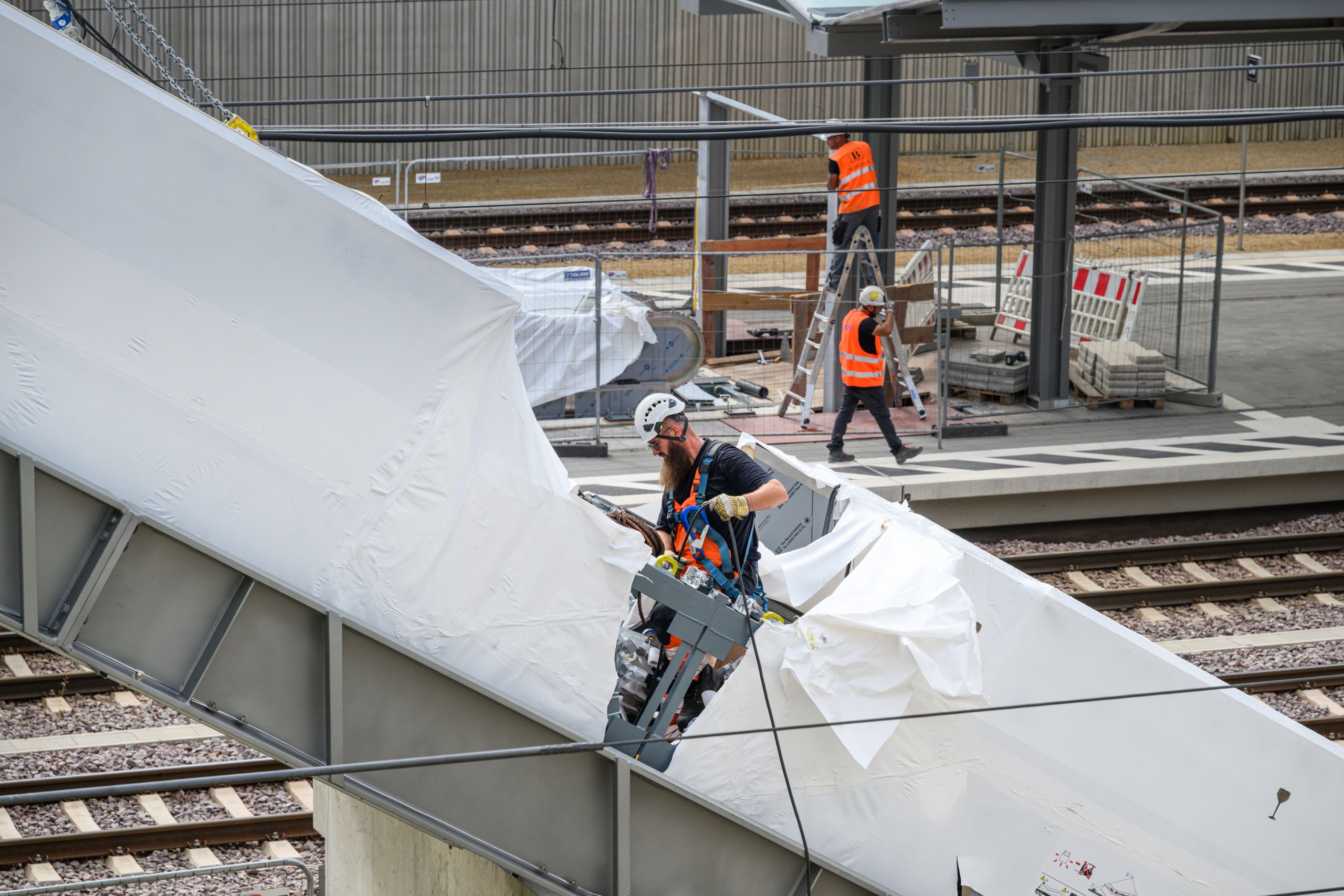
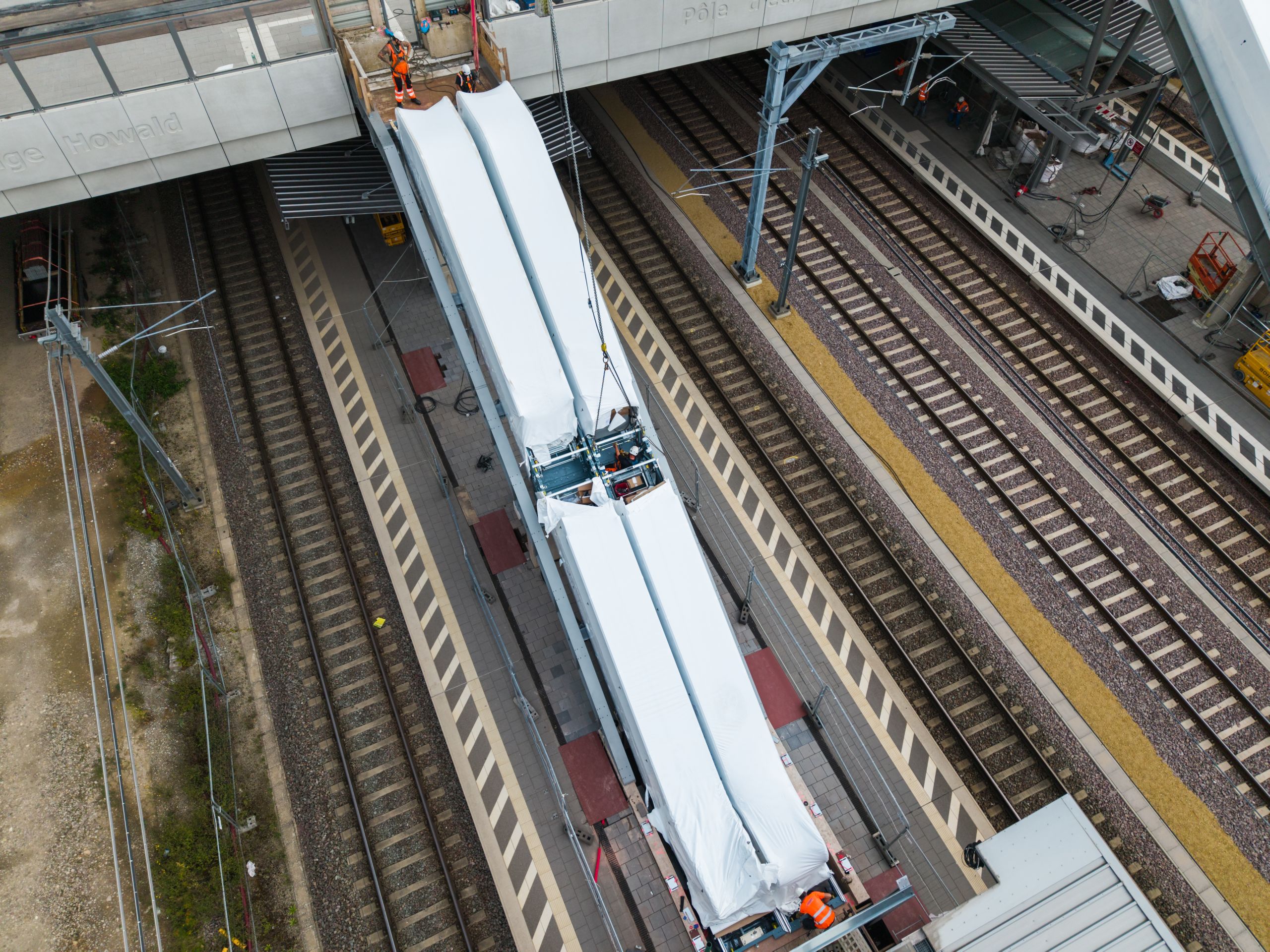
Each escalator is delivered in two separate sections. In total, eight sections had to be installed. Most of the components are preassembled in the factory before being transported to Luxembourg as oversized loads. Once on site, the crucial stage begins: positioning and assembling the individual sections with absolute precision.
Working During a Rail Closure – Essential for the Safety of Everyone Involved
Construction elements weighing several tonnes must be moved above active railway lines. The work is also carried out in the immediate vicinity of overhead lines which, during normal operations, carry 25,000 volts of electricity required to power train services.
“We cannot afford any compromise when it comes to safety,” emphasises Julien. “And it’s not only about the escalators. Many other operations are taking place simultaneously around this installation: moving heavy structures, using large aerial work platforms and carrying out a variety of technical works. The presence of passengers on the platforms or trains operating through the area would simply make these activities impossible.”
In reality, the escalators are only one part of the wider project. While the impressive lifting operations naturally attract attention, numerous teams are simultaneously working on canopies, technical systems, lighting installations, architectural finishes and the final stages of completing the new infrastructure.
It is precisely this level of coordination that makes the project a success.
Engineers, site managers, technicians, installers, safety specialists and numerous partner companies have been working together for several years. Many of them have been involved with the Howald project since its earliest planning stages.
“The greatest challenge is often coordinating all the stakeholders involved,” explains Julien. “Everyone must share the same commitment to precision and safety.”
Over the coming weeks, the installation of the escalators will continue with the integration of the required technical equipment as well as the construction of their protective canopies.
The final technical works and the completion of access routes will follow. Yet even today, it is already possible to imagine the future passenger experience: shorter walking distances, better protected access routes and seamless transfers between different modes of transport.
Or, as people on the construction site now say with a smile: good things come to those who wait.
And perhaps that is the most important lesson Howald offers today. It is not the multi-tonne escalators suspended above the tracks. Nor is it the impressive steel and concrete infrastructure.
Above all, it is the fact that behind all of this stand women and men who have worked together for years to transform a vision into reality, one step at a time.
Other articles you may like
-
 Your mobility of tomorrow12 Oct. 20265 minutes
How Howald has become an essential mobility hub for your mobility
Read more -
 Your mobility of tomorrow11 Sep. 20263 minutes
Fit for the Next 30 Years: Rejuvenation Programme for the Border Bridge in Wasserbillig
Read more -
 Your mobility of tomorrow04 Sep. 20264 minutes
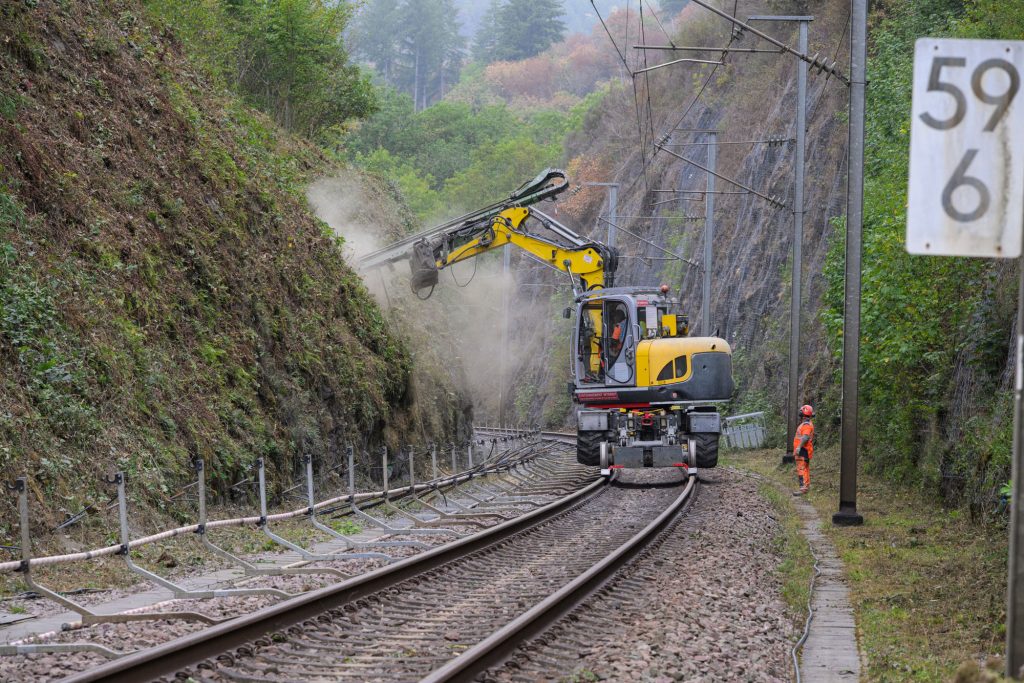
Where Safety Meets the Rock Face
Read more -
 Behind the scenes29 Jul. 20264 minutes
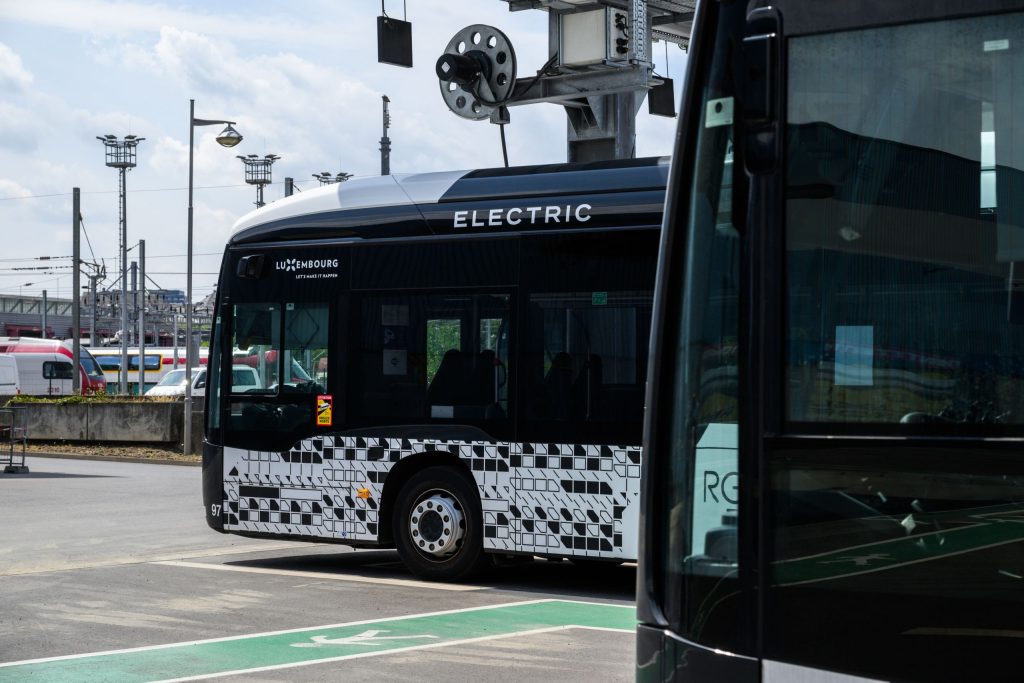
CFL buses are powering ahead with electric mobility
Read more -
Your mobility of tomorrow24 Jul. 20265 minutes
Howald: Reinventing Mobility
Read more -
 Your mobility of tomorrow02 Mar. 20263 minutes
Reaching New Heights in Howald
Read more