
engineering works/projects
18 September 2026
1 minute
Rock stabilisation works by the numbers
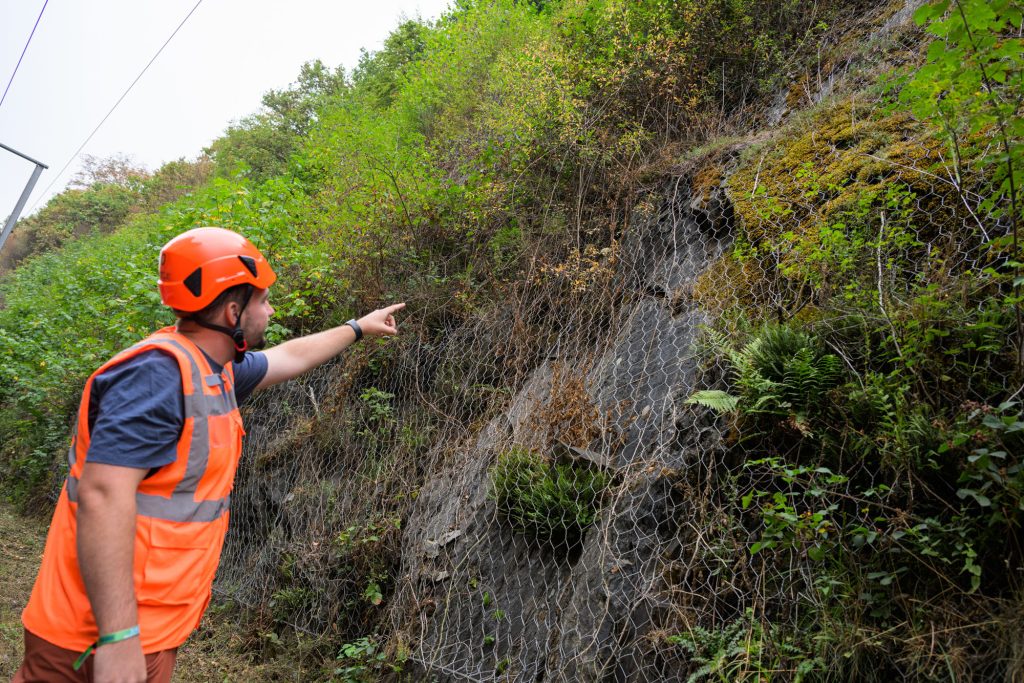
When it comes to safety, the CFL never cuts corners. A few days ago, our colleagues quite literally stirred up a lot of wind while securing the rock faces.
Along a section of almost 300 metres, the CFL, with the valuable support of its contractors, carried out extensive rock stabilisation works. The aim is to effectively prevent rock movement and potential rockfalls, where slate fragments could fall onto the railway tracks.
The CFL also received support from the air. Hovering around 20 metres above the treetops, the three-bladed helicopter played a key role in transporting the protective nets into place. Not long ago, the same aircraft was deployed in the High Fens nature reserve.
Rock stabilisation works by the numbers :
- 40 steel mesh nets were required to secure the 300-metre-long rock face.
- Each net weighs at least 150 kilograms.
- It took just 60 minutes to transport all nets into position by helicopter.
- The longest net installed measures 14 metres.
- A total of 200 boreholes/rock anchors were drilled and installed beforehand to secure the nets to the rock face.
Other articles you may like
-
engineering works/projects18 Sep. 20261 minute
Rock stabilisation works by the numbers
Read more -
 Behind the scenes13 Aug. 20263 minutes
1,000 bus journeys a day: inside the summer 2026 rail replacement operation
Read more -
 engineering works/projects01 Jul. 20262 minutes
400 tonnes ‘moved’ with method and precision
Read more -
 Behind the scenes16 Apr. 20263 minutes
Trains at a standstill, full activity on the tracks
Read more -
 engineering works/projects05 Sep. 20254 minutes
Technology and expertise lay the tracks for the future
Read more -
 engineering works/projects30 Jul. 20255 minutes
2.7 km track, 13 switches, 1 new platform… A productive summer for the CFL in Howald
Read more